
Is the Fine-Tuning of the Universe Evidence of Design?
The Precision of Physical Constants
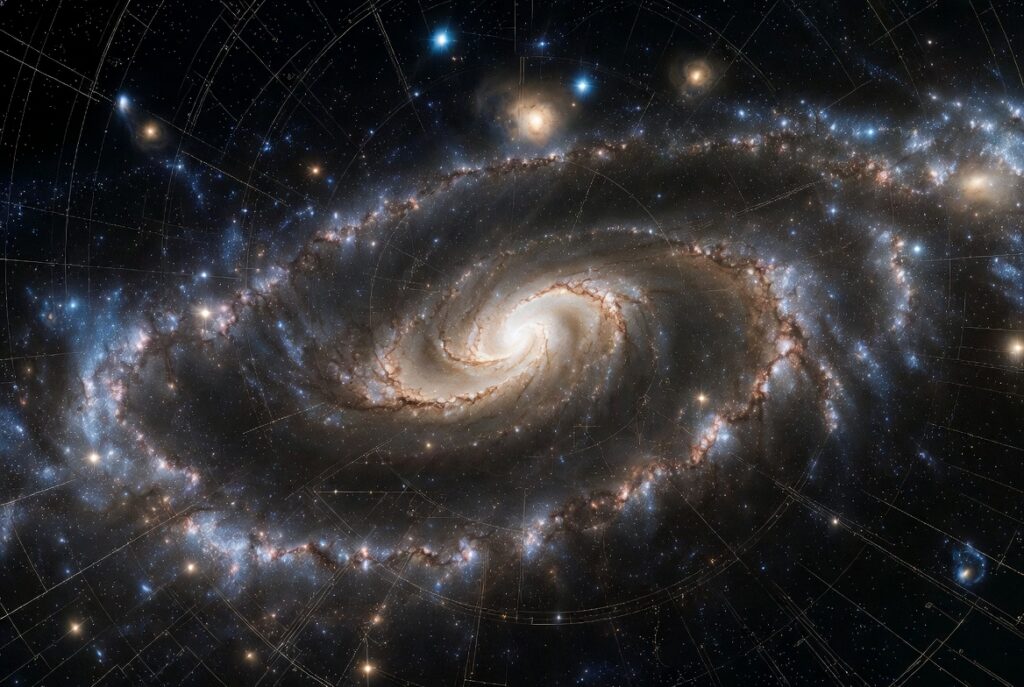
The laws of physics appear delicately balanced. Even tiny changes to fundamental constants would prevent stars, chemistry, and life itself from existing.
Even tiny changes to these constants could make life impossible. Stars might burn too quickly, atoms could become unstable, or chemistry itself may never form. The universe appears delicately balanced for complexity and order.
This extraordinary precision has led many physicists and philosophers to ask an important question: why do the laws of nature seem so carefully calibrated for life?
The Universe Exists Within Extremely Narrow Parameters

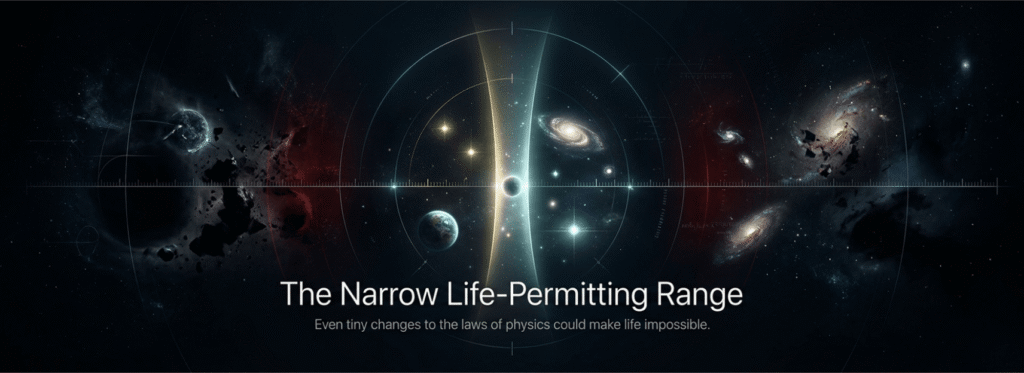
The universe appears to exist within an extraordinarily narrow life-permitting range. Even tiny deviations in the laws of physics could prevent galaxies, stars, planets, and life from ever forming.
Outside this narrow range, matter could collapse too quickly, stars might never ignite, or the universe could expand too rapidly for structure to develop. The balance appears astonishingly precise.
If the universe depends on such astonishing precision, why does reality appear so carefully balanced for complexity and life?
DNA & Information
DNA is not merely chemistry. It contains coded information, storage systems, molecular machines, and extraordinary levels of organization that resemble engineered systems.
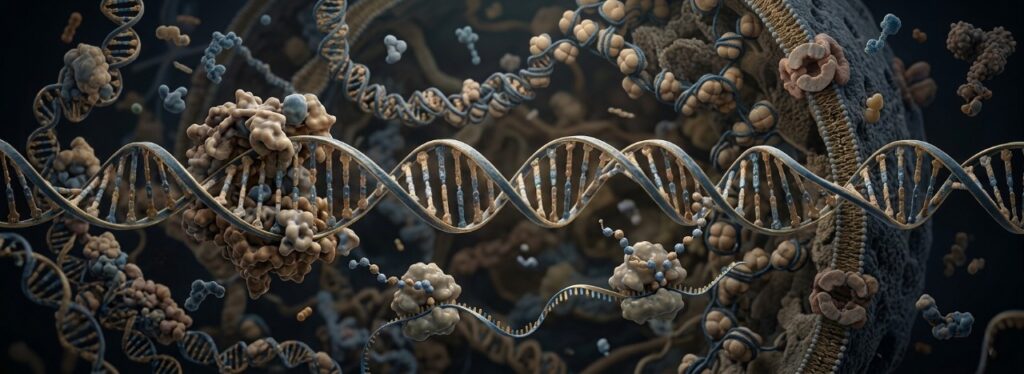
DNA is not merely chemistry. It contains coded information, storage systems, molecular machines, and extraordinary levels of organization that resemble engineered systems.
nside even the simplest living cell are systems that process information, repair errors, and coordinate highly complex functions. The deeper scientists study biology, the more sophisticated these systems appear.
If information is consistently produced by intelligence in every other known context, what should we conclude about the information encoded within life itself?
Consciousness & Mind

Human consciousness remains one of the deepest mysteries in science and philosophy. Thoughts, self-awareness, imagination, morality, and the ability to reflect on existence itself appear profoundly different from the physical processes of matter alone.
Despite extraordinary advances in neuroscience, scientists still debate how subjective awareness emerges from electrical activity in the brain. The human mind can contemplate mathematics, beauty, meaning, and the universe itself — raising questions about whether consciousness is merely accidental chemistry or something more fundamental to reality.
If the universe is ultimately blind and purposeless, why does conscious life possess the ability to search for meaning, truth, beauty, and purpose at all?